Survival games all share one idea: something is coming, and you have to be ready for it. Sometimes it is night and the creatures that wander out in the dark, sometimes a shrinking storm, a hungry shark or a toy that should not be moving. What changes from game to game is how long a run takes, how much building and planning you do, and how spooky it feels. None of the games here are gory: when things go wrong you get a cartoon bonk, a BOO or a splat of goo.
Below, the survival games on this site are grouped by the kind of challenge they give you, with what makes each one different, how long a session really lasts and a tip or two to survive longer. All of them run in the browser, and most save your progress on your device so you can come back later.
Build by day, survive the night
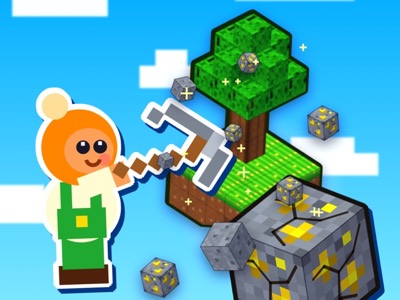
Block World is the one to pick if you love crafting. Punch trees for logs, turn them into planks, sticks and a crafting table, then make pickaxes that dig deeper: stone first, then iron, gold and diamonds. A full day and night lasts 8 minutes, and after dark bouncy Gloops and goofy Grumblers wander out. Your first night goes best with a small hut lit by torches, which you make from coal and a stick, four at a time. If you run out of hearts you wake up at your spawn with your backpack still full, so it is forgiving for younger builders. Creative mode lets you fly and build with every block if you just want to make things.
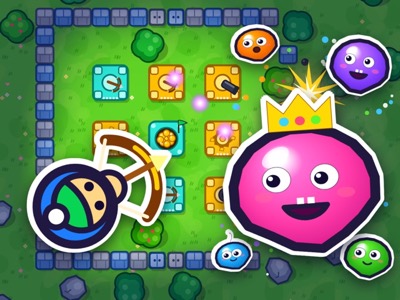
Goo Fort is faster and more like a strategy game seen from above. You chop trees and smash rocks, drop your Gold Stash, then ring it with walls, gold mines and four kinds of towers before the goo blobs ooze in at night. The first day gives you 100 seconds to set up and every day after that lasts 55. Every fifth night King Gloop rolls in and splits into smaller gloops when you pop him. Put a gold mine down early, because gold pays for every upgrade and mines keep digging through the night.
Keep the fire burning
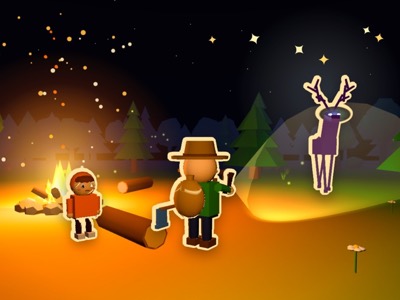
Forest Nights is a camp survival game in a big low-poly forest, and it has a real goal: rescue four lost kids called Pip, Juno, Milo and Tess. Your campfire is the only safe light when night falls and the Hollow Stag comes stalking. Each day lasts 100 seconds and each night 70, so you are always racing the clock to chop logs, haul scrap and food in your sack, and feed the fire.
Every campfire level makes the safe circle bigger and rolls the mist back, which is how you reach the next lost kid, so feeding the fire early is the key habit. At night, shine your flashlight straight at the Stag until it runs off. Pick Weekend Camp for a 10-night run or The Long Haul for all 99, on Easy, Normal or Hard. Your run is saved, so a long game can be spread over many visits.
Survive on the move: sea and rails
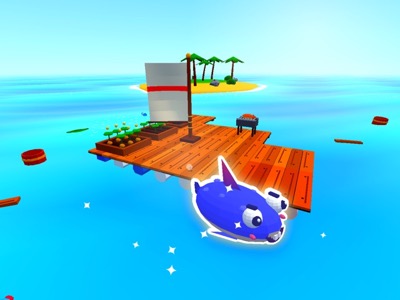
Raft Drift starts you on a tiny four-tile raft in a bright cartoon ocean. Planks, plastic, palm leaves and loot barrels float past, and you throw a hook to reel them in. You also have to keep your water and food up, so a purifier, which turns sea water into fresh water in a few seconds, is one of the first things worth building. Munch the shark bites the edges of your raft: bonk it three times with a spear, then fix the bitten tile with the hammer. Twenty quests walk you through every part of raft life, which makes it a calm, steady survival game for players who like to grow something tile by tile.
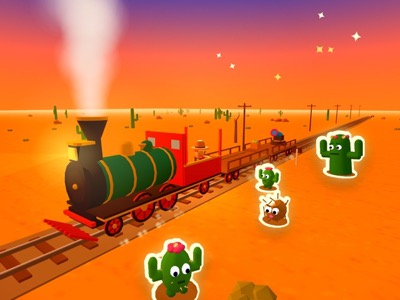
Desert Rails is a road trip with a goal: drive a steam train 80 km across the desert to Sundown Springs. You keep the boiler fed with coal and wood, hop off to loot towns, farms and camps, and bonk the silly cactus critters and tumbleweeds that come out at night. Throw spare fuel onto your train cars while you loot so you can feed the boiler later, and keep a bandage or two for the bridge at the end, where you must hold off the critters for 40 seconds. Coins you collect are kept between runs and buy upgrades at the Depot, so even a short trip makes the next one easier.
Short rounds when you only have a few minutes
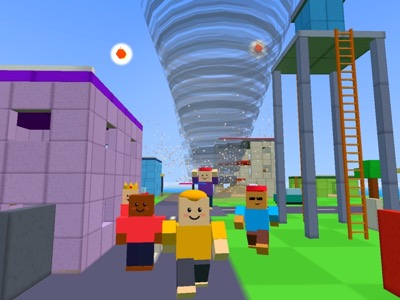
Disaster Island is the quickest survival game on the site. You and ten bot players land on a small island, a random disaster is announced, and you have to stay alive for 60 seconds. There are four maps and eight disasters, and later rounds can stack two at once. The buildings are made of blocks, so walls crack and towers fall apart around you. For a flood or lava, climb to the highest roof you can reach, because swimming tires you out. Acid rain, blizzards and sandstorms only hurt you outside, and in an earthquake you want to get away from tall walls.
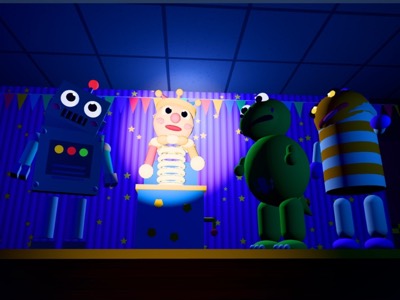
Night Shift puts you in a security office at a toy shop from 12 AM to 6 AM. Each hour lasts 50 seconds, so a whole night takes about five minutes. Four toys wander the store, and you watch them on 11 cameras, check the door lights and slam the doors, but every gadget drains power. Only shut a door when the light shows a toy standing there. It is gently spooky: if a toy catches you it yells BOO and throws confetti, and you can try again right away.
Sneak and hide
Hush Hotel is survival by staying out of sight. You walk door by door through a spooky-cute hotel, searching drawers for coins and keys and trying to reach door 100. Silly ghosts check in along the way, and each one gives a warning and has its own trick to beat. Flickering lights mean Zoomer is coming, so jump into a closet. STOMP STOMP means crawl under a bed. When Blinky the eyeball chimes, look at the floor as you walk past.
Every room is built fresh each run, so you cannot memorise the layout. You learn the ghosts instead, and the Ghost Book fills in as you meet each one. Coins carry over, so you can spend them on a revive or on a flashlight, lockpicks and other gear for the next run. It suits players who enjoy a little tension and reading clues more than fighting.

Action survival: swarms and storms
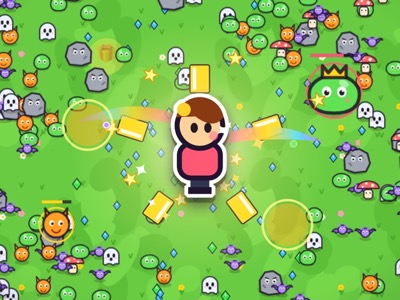
Survivor Swarm is survival with only one control: moving. Your weapons fire on their own while hundreds of cute monsters close in, and the gems they drop level you up so you can pick new weapons and power-ups. The goal is to last 15 minutes before the Grand Gloom arrives for the final fight. The best habit is to move in big loops so the swarm trails behind you, then curve back to sweep up gems. Surviving 8 minutes unlocks the next stage, and gold from every run buys permanent PowerUps.
Storm Royale drops you onto an island with 15 bots, and only one player is left at the end. You open chests for foam blasters, chop trees for wood to build walls, and keep moving as a purple storm shrinks the safe circle over six stages. Check the map often with M and start walking toward the white circle before the storm reaches you. A match is longer than most games here, and it rewards planning as much as aim.
Which survival game should you pick?
If you have five minutes or less, play a round of Disaster Island or one night of Night Shift. Both give you a full beginning, middle and end in that time. If you have twenty minutes and like action, a run of Survivor Swarm fits nicely.
If you want a long project to return to over days, choose Block World, Raft Drift or Forest Nights, which all save your world or run. Goo Fort and Desert Rails sit in between: a run can be short, but coins or saved forts mean each visit builds on the last.
For younger or easily spooked players, Block World with its forgiving respawn, Raft Drift and Goo Fort are the gentlest. Hush Hotel and Night Shift have the most jump-scare feeling, even though every scare is a silly cartoon one.
Survival skills that work in every game
Use the quiet time. Almost every game here has a calm phase before the danger: daytime in Block World, Goo Fort and Forest Nights, or the 8-second countdown that starts every Disaster Island round. Players who gather and build during the calm survive the loud part far more easily.
Learn the warning signs. The survival games on this site are fair: the Stag shows up at night, ghosts in Hush Hotel announce themselves, meteors in Disaster Island land on a red circle, and toys in Night Shift show up in the door light first. Once you know the signal, you can react before it is too late.
Spend between runs. Desert Rails, Hush Hotel and Survivor Swarm all let you keep coins or gold after a failed run and spend them on things that help next time. A run that ends early is never wasted if it buys you a better start next time.